

The geopolitical chessboard is on fire and balances are collapsing in a deafening manner. Donald Trump is losing control, his successor JD Vance finds himself in an inconceivable dependence on Tehran, while Europe is revealed to be strategically naked, now openly betting on an extreme scenario: the departure or even the death of Vladimir Putin. At the same time, a fierce succession battle is unfolding in the background of Washington featuring Vance and Marco Rubio, while the war with Iran is turning into a boomerang that threatens to blow up not only the Trump presidency but the entire US political system. As if that weren't enough, a dangerous narrative dominates Brussels and Kyiv: that the "solution" to the war in Ukraine passes through the... disappearance of Putin, a strategy that reveals deadlock, panic, and a complete lack of a plan for the next day.
The "successor" has been designated
During the assassination attempt against the US President, the Secret Service saved the Vice President first. JD Vance was violently pulled from the table in the banquet hall and moved backstage, and Donald Trump was "evacuated" second, and carelessly, resulting in him stumbling and falling. In movies, details like these are used to detect a conspiracy. In real life, it is more likely to be explained by sloppiness. It is telling that a failed terrorist—a teacher with no law enforcement experience—launched a frontal attack and was doomed from the start, but managed to pass the first line of defense of the Secret Service and was taken down at the second. What can one say… their Secret Service are not exactly "eagles." They have already lost several presidents.
Trump lucky in the end
Trump, with such security, is lucky, even breaking records. This is already the third publicly known assassination attempt. In the past, US presidents have suffered at most two. Moreover, immediately after the first, it was announced that JD Vance would be his vice-presidential candidate. Given that JD Vance was a political "orphan" with little personal popularity, the only explanation given for this choice was the most obvious: insurance against further assassination attempts. The views and biography of JD Vance make him an even more dangerous, and therefore unacceptable, candidate for the top spot than Trump.
Information provided in trickles
We will learn how well the insurance works in a year at the latest, when the new Congress tries to put the president on trial. In practice, this is almost the same as death… the "unacceptable" JD Vance will rule the White House until 2028. However, the risks for Trump are now higher than ever due to developments (impeachment is what the Democratic Party opposition promises voters) and the scandalous nature of numerous events—from the Epstein case to the attack on Iran. Especially the attack on Iran.
Approval ratings falling
This bet is destroying not only the president's approval ratings but also the entire Republican Party, which is expected to suffer an unprecedented defeat in the November elections for Congress. After that, the battle for power in America after Trump will be wide open. It has already begun and, on the Republican side, there are two contenders: Vance, the anti-elite, and the "golden boy of Capitol Hill," the "Washington chameleon," the highest-ranking Latino in US history—in short, the current Secretary of State, Marco Rubio.
The Vance - Rubio battle
Marco Rubio should be considered the candidate of the "hawks," the Russophobes, and the enemies of Trumpism: although he appears to be a Trumpist and endlessly loyal to his boss, he will likely be the one to betray him at the most critical moment. JD Vance and Marco Rubio are very different people and their tactics differ, but they have one thing in common: both were against the Iranian adventure, although for different reasons. JD Vance represents the isolationist wing, which dislikes the idea of fighting in distant lands for someone else's interests. Rubio is not against war (and this is dangerous), but he would prefer to focus on Latin America. Operations such as the kidnapping of the president of Venezuela and the blockade of Cuba are his plans.
Different... duties
However, regarding this adventure (and the main problem of the US at the moment), they behave in the opposite way, and this completely contradicts the official line. The vice president is someone who exists just in case, without power or staff, cutting ribbons and feeding sweets to children. And yet, Vance is the one negotiating with Tehran. And thanks to his mediation efforts, the US declared a ceasefire, canceling promised strikes on bridges and power stations. In other words, he is doing the job of Secretary Marco Rubio. And what is the Secretary of State doing right now, when issues of war and peace are at stake? His last statement on Iran was that the US is happy to host the Iranian national football team at the World Cup, but will not allow the presence of representatives of the IRGC. Before that, he was negotiating with a European Commissioner for a memorandum of understanding on rare earth elements and drafting sanctions lists for drug barons. In a time of war, such things are handled by a junior assistant to a mid-level advisor, not the Secretary of State.
Rubio's distancing
Marco Rubio is trying to distance himself from the war started by his homeland, but not out of shame for his country. Despite his age, he is the most experienced politician (though not a functionary; that is different) in Trump's inner circle, including Trump himself, and he should understand better than anyone where all this is leading. As Harvard professor Steven Walt put it in an interview with the Financial Times, "Marco Rubio believes that Iran is a complete failure, and the less he has to do with it, the better." Overall, everything is heading either toward the resumption of bombings by the US and Israel, or, more likely, toward a formula of "no war, no peace, just closing the Strait of Hormuz." Trump believes (not without reason) that he found Iran's weak point by blocking oil exports through the Strait. But the Iranians know that a war with them is unpopular in the US due to the consequences: gasoline prices rise and stock prices fall (including those of arms manufacturers, as their products have received bad publicity). Meanwhile, they are waiting until the new Congress, which will cut off Trump's funding for the operation.
Stagnant issue
Consequently, the situation risks remaining in limbo for a long time. And Vance, more than anyone else, is interested in achieving a result in the form of a treaty as soon as possible: Trump will be gone in 32 months at most and he has a long political life ahead of him. If he achieves a result, he will be able to run for president in 2028 with the stance "I didn't start this war, but I finished it." He corrected, shall we say, a terrible mistake.
Not many options
The truth is that JD Vance cannot renounce his boss. He does not have his own infrastructure and base, while Rubio has it all. When the Secretary of State begins to cross paths with the Vice President, he can count on the support of the "deep state" and the "Washington swamp." The Latino is planning his evacuation from the sinking ship of Trumpism, possibly by next spring. Then he will state that he was happy to serve the country but it cannot continue like this, and then he will begin to rally disappointed Republicans to defeat the boss's successor (likely JD Vance) in the primaries. If he wins, it won't matter who his Democratic opponent is. The new US president will be a member of the old elite. The story of Trumpism will be over.
The balances for Vance
Vance's prospects look worse, as diplomacy as a whole has no prospects. The Iranians are willing to negotiate with him, but he needs to achieve too much to save his credibility in Washington: the opening of Hormuz, as before, and the removal of Iran's nuclear fuel. For Tehran, the first is a new foundation for its ruined economy; the second is its most important national project. Selling all this would be very expensive and would require security guarantees for itself and its allies, which Israel, for its part, has no intention of providing and is ready to cancel the deal at any moment. In short, everything is very complicated.
On Vance's "head"
Unlike the treacherous fellow traveler of the Trumpists, Rubio, JD Vance is doomed to share responsibility for the failures of the current president, unless he makes a special effort and verbally appeases Iran. In other words, it now depends on Iran whether Trump has the chance to find a successor and maintain his political legacy. This is not the kind of dependence the occupant of the White House wanted to have, but he shouldn't have started a war either. Russia warned him, after all. However, if the United States had listened to Russia's warnings, there would have been not one, but ten fewer wars in the 21st century.
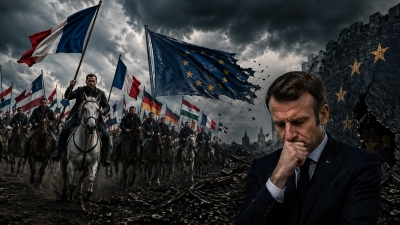
Europe bets on Putin's death
After the EU approved a loan of 90 billion euros, Kyiv and Brussels boasted so much they couldn't even... fit through the door. According to European data, a historic victory had been achieved and now, with these billions, only remnants of the exhausted Russian army would be left on street corners. There is no point in arguing with schizophrenics. One can only cite a short excerpt from a recent report by the Congressional Research Service (CRS) titled "Effectiveness and Prospects of the Russian Military in Battle": "The Russian armed forces have carried out numerous reforms and will be able to maintain the current pace of operations for the foreseeable future."
The truths
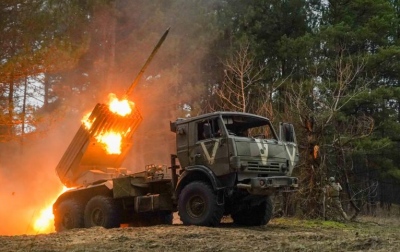
Russia continues slowly but steadily to push back the Ukrainian Armed Forces along the entire front line, which is consistent with the optimistic assessment of the war's progress from the Russian side. Paradoxically, the New York Times went even deeper in its article, "Europe prepares for a long war in Ukraine without a strategy to end it." The conclusion of the analysis is simple. Kyiv and Brussels are at a deadlock. Ukraine, with all the money and weapons in the world, has no chance of defeating Russia, while Europe seems to have the money but lacks the leverage to force the Kremlin into a solution acceptable to Kyiv.
Silent acceptance of defeat
Victory over Russia is now out of the question. The primary and only goal is to prevent it from winning, even if it means countless problems for Europe. However, according to an interesting excerpt from the article, there is a way: "Right now, we are just trying to keep Ukraine in the game until something changes in Moscow—someone dies or is thrown out of a window." You don't need to be Vanga or Cassandra to understand that this refers to Vladimir Putin.
Already hoping...
It is funny that the narrative "if it weren't for Putin, everything would be different" has recently gained new strength. The think tank Wilson Center wrote that "Russia's new leadership could open the door to a renewed cooperation with the West, which could stabilize the world's largest country." The Carnegie Endowment opened its arms and stated that "it is very likely that Russia's leader after Putin will take a step toward the US and Europe" (and, of course, will be immediately given Bavarian beer). But there is a detail: the foreign agency Radio Liberty hinted that the scenario of such a long-awaited restoration of relations with Russia can be realized "only on the condition of Vladimir Putin's departure—either due to natural causes—death, or based on a decision not to run for the presidency again after his current term ends." In other words, the dissonant but persistent chorus of Western media and "analytical" sources clearly and persistently promotes the idea that Putin stands between peace, prosperity, and a beautiful Russia of the future.
Whose war is it?
All this would be very funny if it weren't an absolute and total lie. The Western project Riddle, dedicated to studies of Russia, recently published a curious article titled "Whose war is it?". It makes a rather apt observation. Since the start of the Cold War, Western media and officials were quick to refer to the conflict in Ukraine as "Putin's war," "Putin's invasion," and "Putin's aggression." But at some point, a mistake occurred and the conflict gradually began to be called "Russia's war" and "Russian aggression." The authors of the article pointed out that despite mantras such as "we are not enemies of Russia, we are enemies of Putin," the Western establishment quickly dropped its smiling mask and began to persecute and "cancel" every Russian—including even (to their great surprise) staunch oppositionists. But the main lie is that Putin became an enemy of the West (and the beautiful Russia of the future) because of the start of the war and the return of Crimea.
They found their "enemy"...
The wonderful internet of the past convincingly demonstrates that Putin and Russia became enemies of the West long before that—namely, exactly after we stood up and declared that we would not dance to their tune and would not tolerate creeping aggression in our direction. A perfect example is the book "The New Cold War: Putin's Russia and the Threat to the West" by Edward Lucas, former editor-in-chief of The Economist in Moscow, published in 2008, when hopes for an agreement between Russia and the West were still very high.
Becoming independent
This book was written specifically for the closed-door hearings of the Helsinki Commission (also known as the Commission on Security and Cooperation in Europe of the US government). Here are some eloquent excerpts from it: "Russia has paid off its debts, the IMF and external creditors can no longer impose terms on it." "Russia is a major power with resources, nuclear weapons, and the ability to project power and influence in Europe." "The new Russia of Putin is a factor that undermines European security and sovereignty." Just a year earlier, Putin had stated the following at the Munich Security Conference: "I consider it obvious that NATO expansion has nothing to do with the modernization of the alliance itself or ensuring security in Europe. On the contrary, it constitutes a serious challenge that reduces the level of mutual trust." To this, the British newspaper The Guardian replied very simply: "Starting from Putin's speech in Munich in 2007, the West began to unite against Russia."
Goal is the dismantling of Russia
In March 2025, the German political think tank Heinrich Böll Foundation wrote that, regardless of the outcome of the conflict in Ukraine, "a huge number of Western experts advise (to continue) to work for the dismantling of Russia, arguing that otherwise Russia will constitute an eternal security problem for the rest of Europe." The Westerners do not need a dead Putin—they need a dead Russia…
www.bankingnews.gr




Σχόλια αναγνωστών